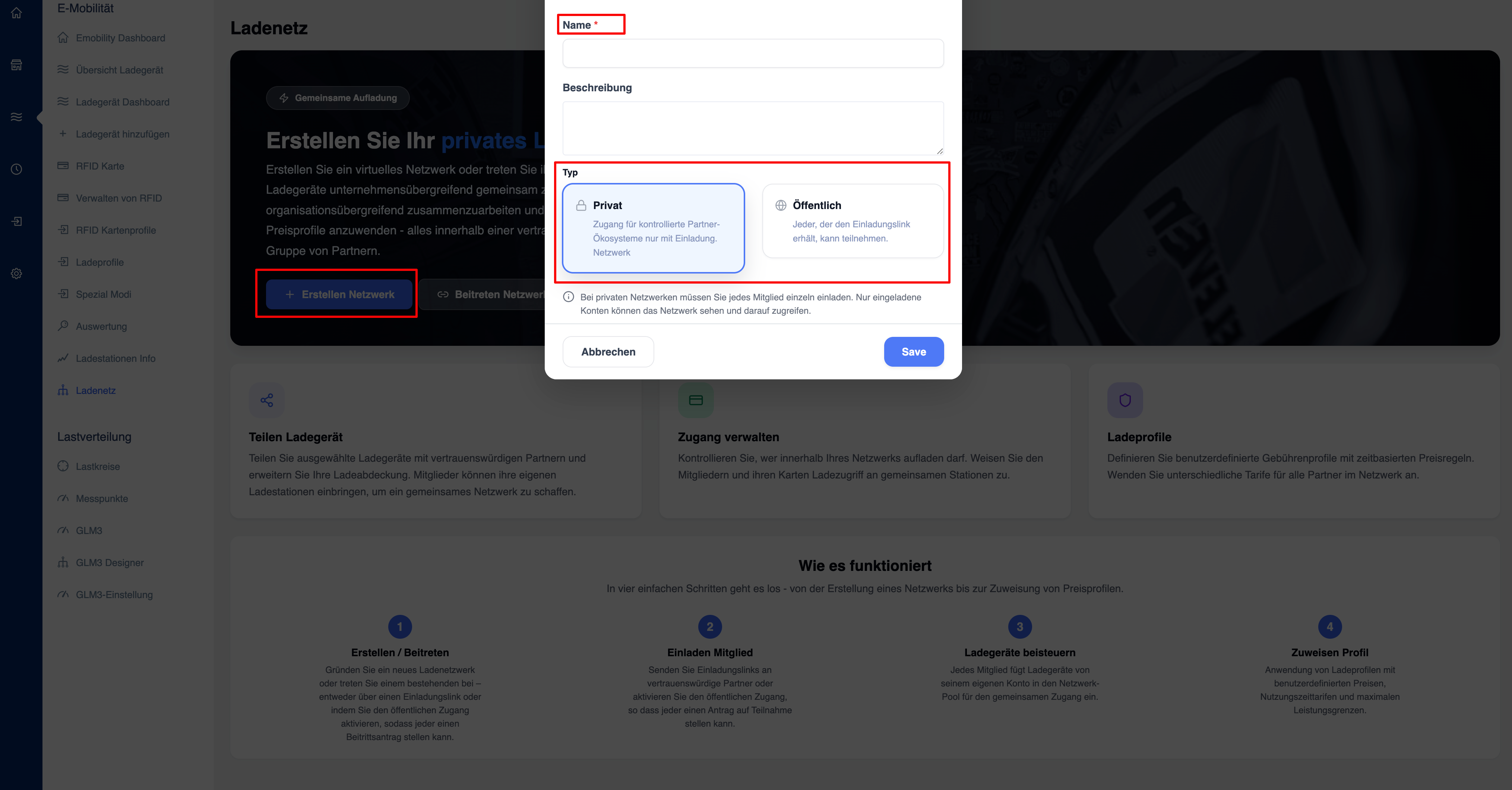
An Introduction to Store Networks
Welcome to Charging Networks
Charging Networks allow you to create a virtual group of charging points, which you can share with selected partners or make publicly available to all Eponet users.
Charging Networks enable organisations, businesses, residential estates and public operators to group multiple electric vehicle charging points into a single managed network. Instead of managing each charging point individually, a charging network offers a centralised way to organise chargers, members, permissions and prices.
A network allows multiple users to access charging points based on defined permissions, whilst network administrators retain full control over who is allowed to join, which chargers are shared and how charging sessions are billed.
Whether you’re setting up a private network for staff or running a public charging community, charging networks simplify collaboration and day-to-day management.
Key benefits:
This guide walks you through all the features using screenshots and step-by-step instructions.
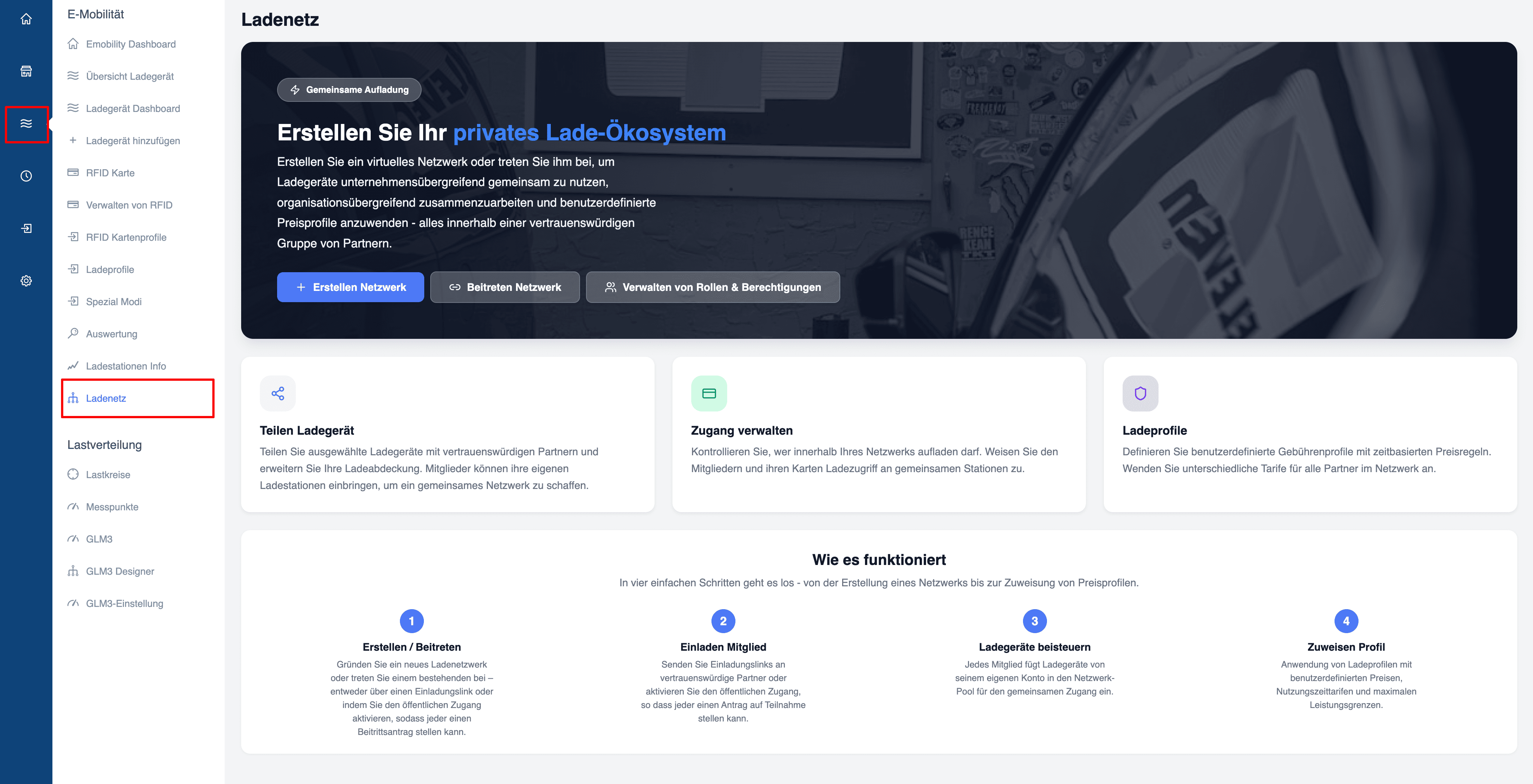
Navigation
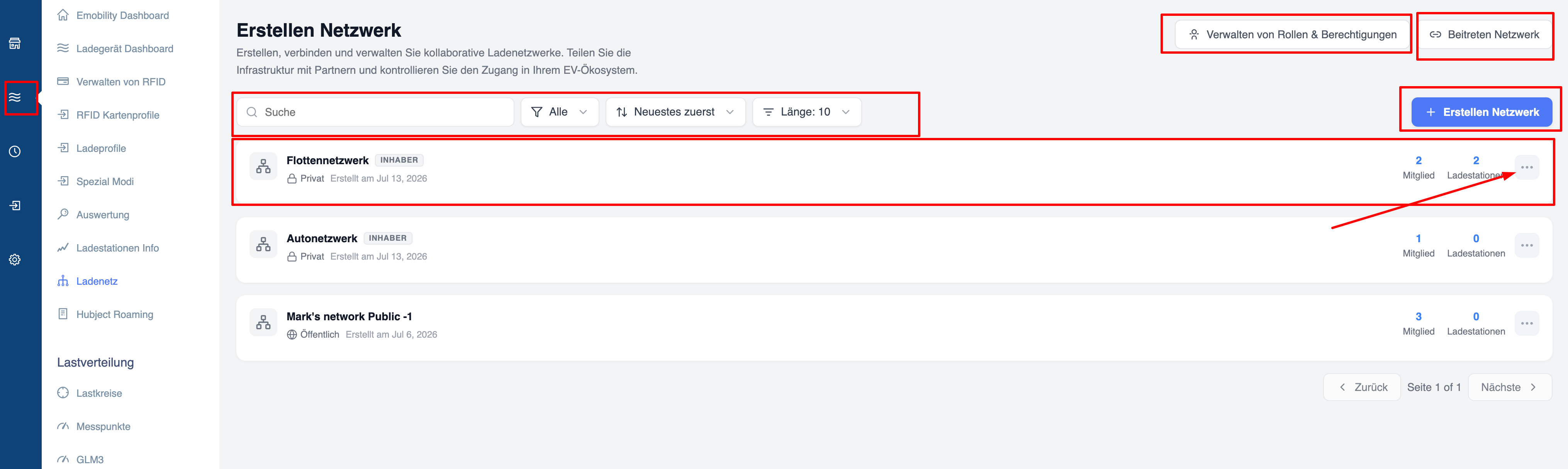
You will be taken to the ‘Charging Networks’ main overview. Here you can see all the networks that you own or are a member of.
Available main actions:
- Create a new network
- Join public networks
- Manage roles and permissions
- Search for and filter networks
Each network card displays the number of members, the number of chargers and a quick-action menu (Details, Edit, Share, Delete/Leave).
How charging networks work
Private networks Only people you personally invite (via email (must be a registered Eponet user), link or QR code (available soon)) can join. Ideal for businesses, partner organisations or trusted groups.
Public networks Anyone using the Eponet platform can find and join the network. Suitable for community charging, local authorities or open initiatives.
How it works:
- The owner creates the network and sets the standard prices
- The owner adds their own charging points
- Members are invited or join publicly
- Members can charge their vehicles at any station in the network using their RFID cards
- Members can also add their own chargers
- The operator monitors usage, revenue and access rights